Bibliometrics
Quantitative study of recorded documents and patterns in publications, authorship, citations and literature use.
"A library is not a mere storehouse of books; it is a dynamic fountain from which the waters of knowledge flow to nurture every soul in the community."
Mathematician, philosopher, educator, and the immortal architect of Indian librarianship. Dr. S.R. Ranganathan transformed library administration from empirical routine into an exact information science governed by normative laws, analytico-synthetic classification, and facet postulates.
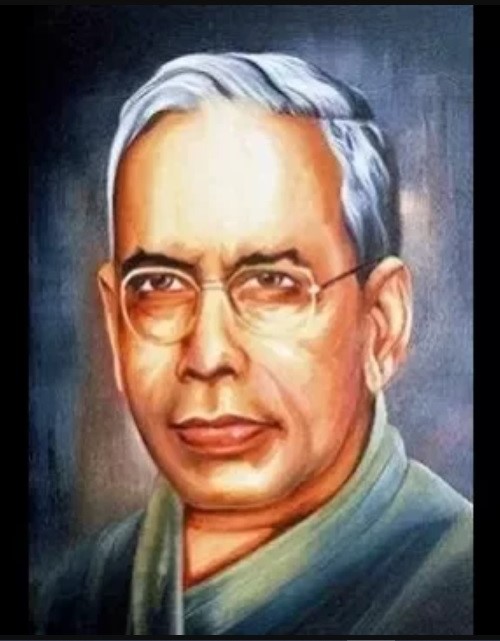
M.A., D.Litt. (Delhi & Pittsburgh), L.T., F.L.A. (UK)
Every law, canon, facet formula, cataloguing code, and legislative milestone systematically documented.
Enunciated at Meenakshi College (1928) and published in 1931. Covers book utilization, universal access, open shelf serendipity, time efficiency, and organic growth—plus modern web, OER, and AI interpretations.
India's first analytico-synthetic classification scheme across 7 editions. Features the 5 Fundamental Categories (PMEST), Rounds & Levels, Phase Relations, Devices, and the APUPA shelf arrangement pattern.
Detailed in Prolegomena to Library Classification: 15 Canons for Idea Plane, 4 for Verbal Plane, 24 for Notational Plane, 9 Principles of Facet Sequence (Wall-Picture, Cow-Calf), and General Laws.
The 6 sections of a CCC Main Entry, 9 Canons of Cataloguing (including Recall Value), and mechanical derivation of subject headings via Chain Procedure.
Founder of MALA (1928), ILA (1933), INSDOC (1952), Sarada Ranganathan Endowment (1961), and DRTC Bengaluru (1962). Drafted the first Model Public Libraries Act (Madras Act 1948) and coined Librametry.
Interactive AI Concept Explainer for instant queries on Ranganathan's terminology, plus a 15-question high-yield UGC-NET / JRF / KVS mock examination with detailed analytical solutions.
— W.C. Berwick Sayers (Chief Librarian, Croydon & President, Library Association, UK)
— Margaret Mann Citation in Cataloging and Classification (ALA)
From a mathematics lecturer in Madras Presidency to the National Research Professor who donated his entire life savings to endow a chair in Library Science.
1. Early Life & Mathematical Foundation (1892–1923): Born on 12 August 1892 in Shiyali (now Sirkazhi), Tanjore district, Tamil Nadu, to N. Ramamrita Ayyar and Seethalakshmi. Having lost his father at age six, he was mentored by high school teacher P.A. Subramania Ayyar and later by Professor Edward B. Ross at Madras Christian College, where he completed his B.A. (1913) and M.A. in Mathematics (1916), followed by an L.T. degree from Teachers' College, Saidapet (1917). He taught mathematics at Government College, Mangalore, Government College, Coimbatore, and Presidency College, Madras (1917–1923).
2. University of Madras & The London Epiphany (1924–1925): Appointed the first University Librarian of Madras University on 4 January 1924, Ranganathan travelled to England in September 1924 to study at the School of Librarianship, University College London. Mentored by W.C. Berwick Sayers, he visited over 100 British public and academic libraries. Dissatisfied with the enumerative rigidity of Dewey Decimal Classification (DDC), he conceived the analytico-synthetic model after watching a demonstration of a Meccano toy set in a Selfridges department store in London—realizing that slotted strips, nuts, and bolts could be combined to represent any complex subject using a colon (`:`) as the connecting bolt.
3. The Golden Era at Madras & BHU/Delhi (1925–1957): Returning to Madras in 1925, he single-handedly reorganized the University Library, founded the Madras Library Association (MALA) in 1928, started the Certificate Course in Library Science (1929), and published his classic quartet: Five Laws (1931), Colon Classification (1933), Classified Catalogue Code (1934), and Prolegomena (1937). Upon retirement from Madras in 1945, Pt. Madan Mohan Malaviya and Dr. S. Radhakrishnan invited him to Banaras Hindu University (1945–1947), where he personally classified over 100,000 volumes. From 1947 to 1955, at the invitation of Sir Maurice Gwyer, he established India's first Master's (M.Lib.Sc.) and Doctoral (Ph.D.) programs at the University of Delhi.
4. Philanthropy, DRTC & Final Years (1957–1972): Living with Gandhian austerity (eating one frugal meal, wearing khadi, walking barefoot to work), he saved ₹1,00,000—which he donated to the University of Madras in 1957 to establish the Sarada Ranganathan Professorship in Library Science (named after his wife Sarada), the first endowed chair in LIS in the Commonwealth outside the USA. In 1962, with Prof. P.C. Mahalanobis, he founded the Documentation Research and Training Centre (DRTC) at the Indian Statistical Institute, Bengaluru, serving as National Research Professor (1965) until his demise on 27 September 1972.
Celebrated across India as National Librarian's Day.
Departs for University College London in Sept 1924; conceives Colon Classification after observing a Meccano set.
Presents the Five Laws at the Provincial Educational Conference, Meenakshi College, Chidambaram.
Five Laws of Library Science (1931), Colon Classification (1933), Classified Catalogue Code (1934), Library Administration (1935), and Prolegomena to Library Classification (1937).
Reclassifies over 1,00,000 volumes at Banaras Hindu University.
Launches M.Lib.Sc. at Delhi University; coins "Librametry" at the Aslib Conference in Leamington Spa, UK; receives D.Litt. from Delhi University.
Conferred Padma Shri; chairs the UGC Library Committee; donates life savings for the Sarada Ranganathan Chair.
Founds DRTC (1962); appointed National Research Professor (1965); receives ALA Margaret Mann Citation (1970); passes away on 27 Sept 1972 in Bengaluru.
Conceived in 1928 with the help of Prof. Edward B. Ross (who suggested the first law) and published in 1931, these five laws serve as the supreme court of appeal for every library practice.
Central Location: A library must be placed at the heart of the town or university, like a busy commercial store—not isolated for silence.
Extended Hours: Must remain open during evenings and holidays when citizens and scholars are free to read.
Library Furniture: Racks should not exceed 6.5 feet in height so every shelf is reachable without ladders.
Scholarship + Service: Staff must combine academic mastery with warm hospitality, abandoning the medieval "caretaker" mindset.
Status & Emoluments: Advocated academic parity with university professors to attract first-rate minds.
Open Access & OER: Institutional repositories (DSpace), Open Educational Resources, DRM-free PDFs, 24/7 remote authentication (Shibboleth/EZproxy), and mobile library apps.
1. Obligation of the State: Enacting Public Library Acts, levying library cess, and building a national grid of state, district, and rural mobile libraries (Librachines).
2. Obligation of the Library Authority: Judicious book selection based on user demand and local language needs.
3. Obligation of Staff: Reference service to help every abnormal or normal reader—children, women, rural farmers, hospital patients, prisoners, and the visually impaired (Braille).
4. Obligation of the Reader: Observing library rules, returning books on time, and never mutilating pages.
Inclusive Access: WCAG screen-reader compatibility, Daisy talking books, Inter-Library Loan (DELNET/INFLIBNET), ONOS (One Nation One Subscription), and personalized AI reading feeds.
Open Access: Allowing readers directly into the stacks to browse freely so neglected books find their ideal readers.
Classified Arrangement (APUPA): Placing related subjects together so a reader seeking an Umbral book discovers Penumbral books alongside it.
Analytical Cataloguing: Subject cross-references (See / See Also) that expose hidden chapters of composite books.
Extension Services: New arrivals display racks, book exhibitions, reading circles, and public lectures.
Discoverability: Search Engine Optimization (SEO), Schema.org & MARC21 metadata harvesting (OAI-PMH), semantic vector search, and collaborative filtering ("Readers also viewed").
Tier, Bay & Gangway Guides: Clear signage at the entrance, end of each row, and every shelf plank.
Charging Systems: Replacing slow day-books with Browne and Newark charging systems to eliminate waiting queues.
Ready & Long-Range Reference: Instant fact-finding and pre-compiled documentation lists for busy researchers.
Pre-natal Cataloguing: Cataloguing-in-Publication (CIP) to save technical processing time across thousands of libraries.
Instant Retrieval: RFID self-check kiosks, Web OPAC federated search, QR code shelf locators, CAS/SDI alerts, and AI-powered RAG literature summarization.
Child Growth (Quantitative): Rapid physical expansion of books, readers, staff, and modular building space in developing libraries.
Adult Growth (Qualitative): Balanced weeding out of obsolete volumes and continuous renewal of the collection (National Repository Library concept).
Hospitality in Array & Chain: A classification system must accommodate infinite new subjects without breaking existing numbers.
Physical Form of Catalogue: Loose-leaf and card catalogues (now OPAC) allowing infinite insertion.
Elastic Infrastructure: Cloud-native ILS (Koha on AWS), scalable vector databases, digital preservation migration, and evolving from print to multimedia & AI knowledge hubs.
Lynn Silipigni Connaway & Ixchel Faniel proposed placing the 4th Law first for the digital generation: "Save the time of the reader" as the primary gateway to modern discovery systems.
Dr. Ranganathan established a hierarchy of normative principles: Basic Laws (for all disciplines), Fundamental Laws (Five Laws of LIS), Canons (for branches like Classification & Cataloguing), and Principles/Postulates.
When two laws or canons conflict in a specific context, resolved using legal principles of interpretation (1008 principles of Nyaya Kosa).
Between two or more claimants (facets, subjects, or readers), no preference shall be shown without sufficient logical ground.
Of two entities or situations that admit of being regarded as symmetrical counterparts, both should be given symmetrical weight.
Between two or more alternatives bearing on a phenomenon, the one leading to overall economy of manpower, material, money, and time is to be preferred.
General classification and cataloguing codes must provide provision for local adaptations to serve special/local collections.
When a library changes its classification or catalogue code, only new acquisitions and actively circulated old stock need immediate reclassification.
Governs standardized terminology in schedules and indexes to eliminate natural language ambiguity:
Used to determine the exact citation order of facets within a compound subject:
If two facets A and B of a subject are such that the concept behind B will not be operative unless the concept behind A is conceded—even as a mural picture is not possible unless the wall exists first—then facet A precedes facet B.
If facet B is an organ or sub-component of entity A, then A (Whole) must precede B (Organ). Example: Medicine → Human Body → Heart → Ventricle.
If two facets A and B should not be separated but kept together in the same round—just as a milch cow and its unweaned calf are sold together—they are placed consecutively in the same round.
If a phenomenon involves an Action (B) performed on an Actand (A) by an Actor (C) using a Tool (D), their sequence must be: Actand → Action → Actor → Tool.
Governs how coordinate isolates within a single array should be arranged logically:
Complete architecture of Colon Classification: Fundamental Categories, Call Number Formula (Class No. + Book No. + Collection No.), 7 Editions, Phase Relations, Modes of Formation of Subjects, and the APUPA Pattern.
In Ranganathan's system, every document receives a unique Call Number = Class Number + Book Number + Collection Number, ensuring no two books share the exact same ordinal address.
1. PMEST Indicator Digits (CC 6th Ed.):
2. Book Number Formula (8 Facets):
[L] [F] [Y] [A] . [V] - [S] ; [C] : g [Cr]
Language, Form, Year of Publication, Accession part, Volume, Supplement, Copy, Criticism (`:g`).
Build a complete Class Number + Book Number using CC 6th Edition rules
To satisfy the Third and Fourth Laws, Ranganathan formulated the APUPA arrangement: around every core subject (Umbral), semi-relevant introductory/general books precede it (Penumbral) and semi-relevant applied/allied books follow it (Penumbral), flanked on either side by unrelated subjects (Alien).
Unrelated preceding classes (Zero relevance)
Approach materials: Bibliographies, Dictionaries (50% relevance)
Core focal treatises on the exact subject (100% relevance)
Allied & applied extensions of the subject (50% relevance)
Unrelated succeeding classes (Zero relevance)
| Edition | Year | Category / Structural Type | Key Innovations & Connecting Symbols |
|---|---|---|---|
| 1st Edition | 1933 | Rigidly Faceted | Used only Colon (:) as connecting symbol for all facets; 3 parts (Rules, Schedules, Index). |
| 2nd Edition | 1939 | Rigidly Faceted | Introduced Spiritual Experience & Mysticism (Δ Delta); Octave Principle; 4th part of 3,000 examples added. |
| 3rd Edition | 1950 | Rigidly Faceted | Explicit adoption of the 5 Fundamental Categories (PMEST) in rules, though still connected by colon (:). |
| 4th Edition | 1952 | Almost-Freely Faceted | Major breakthrough: Introduced distinct indicator digits — , for [P], ; for [M], : for [E], . for [S], and . for [T]; introduced Rounds & Levels. |
| 5th Edition | 1957 | Almost-Freely Faceted | Planned in 2 stages (Basic Classification + Depth Classification); Zone Analysis introduced. |
| 6th Edition (Most Popular) | 1960 (Reprint '63) | Almost-Freely Faceted | 1963 reprint with annexure replaced the dot for Time [T] with Single Inverted Comma ('); Greek letters replaced by Roman equivalents (except Δ). |
| 7th Edition | 1987 | Freely Faceted (Guided by Postulates) | Edited posthumously by M.A. Gopinath; Matter divided into Matter-Material [MM], Matter-Property [MP], and Matter-Method; Anteriorising indicator (") and Ampersand (&) for Phase Relation. |
Connected using digit 0 (Zero) + Phase Indicator:
| Relation Type | Inter-Subject | Intra-Facet | Intra-Array |
|---|---|---|---|
| 1. General | 0a | 0j | 0t |
| 2. Bias | 0b | 0k | 0u |
| 3. Comparison | 0c | 0m | 0v |
| 4. Difference | 0d | 0n | 0w |
| 5. Tool | 0e | 0p | 0x |
| 6. Influence | 0g | 0r | 0y |
First formulated by Ranganathan in 1950 (4 modes) and expanded by Neelameghan (1973):
Empowers classifiers to construct new isolate numbers without waiting for new editions:
LM Homeopathy).(...), e.g., 2,4(X62) Banking Library.-), e.g., Rural Women.Published in 1934 (5th Edition with additional rules for Dictionary Catalogue in 1964 assisted by A. Neelameghan), CCC is the world's most rigorous code for a bipartite Classified Catalogue.
Classification, Library science.
Library science.
GOPINATH (M A), Assis.
Ranganathan series in library science. 20.
Information recorded in catalogue entries must be strictly ascertained from the Title Page and its overflow pages—not from external guesswork.
The potency to decide the position of an entry among millions of cards should be concentrated maximally in the Leading Section.
The name of any entity (person, corporate body, place) used as a heading must be individualized with resolving homonym elements (e.g., birth year).
Choice and rendering of main and added entry headings must strictly reflect the actual approach terms sought by readers.
Cataloguing rules should be formulated keeping in mind the prevalent nature of book production, open access, and library service.
No element in an entry, especially the heading, should be subjected to change unless the rules themselves are revised.
Subject headings in Class Index Entries must use terms that are in current usage among educated readers.
All added entries for a document must be consistent with the Main Entry, and entries of all documents must be mutually consistent.
In multi-word corporate names or titles, the entry element should be the word/phrase possessing the highest psychological recall value for human memory.
Invented in 1934 (and later adopted by A.J. Wells for the British National Bibliography from 1950–1970, inspiring Derek Austin's PRECIS and G. Bhattacharyya's POPSI), Chain Procedure analyses every digit of a Class Number into four types of links:
1. Sought Link (SL): A link representing a substantive concept that a reader is likely to look up as a subject heading.
2. Unsought Link (UL): A link representing a purely formal/procedural division that readers do not search by directly.
3. False Link (FL): A link ending in a connecting symbol (, ; : . ') or an empty/indicator digit without verbal meaning.
4. Fused Link: A link inside circular brackets (Subject Device) treated as a single indivisible unit.
V = History [Sought Link]
V4 = Asia, History [Sought Link]
V44 = India, History [Sought Link]
V44' = Connecting symbol [False Link]
V44'N = 20th Century [Unsought Link]
V44'N5 = 1950s [Unsought Link - Last Time Link]
V44
Search and filter across Dr. Ranganathan's landmark monographs in classification, cataloguing, administration, reference service, and library legislation.
A framework for the continuous growth of scientific knowledge, explained through four cardinal points.
The starting point: observe a situation, identify a problem and collect relevant facts through observation, records or experiments.
Facts are examined and compared. Inductive reasoning helps identify patterns and formulate empirical generalisations.
The highest point of abstraction: broad principles or fundamental laws are formulated to explain observed relationships.
Deductive reasoning applies general principles to particular situations. Outcomes are examined and may generate new facts for another cycle.
Collect gate counts, circulation data and student feedback.
Identify patterns, such as increased visits before examinations.
Develop a general principle linking access, relevance and library use.
Try extended hours or targeted services and evaluate the results.
Historical note: The Spiral of Scientific Method is discussed in the second edition (1957) of The Five Laws of Library Science. Consult the original edition for exact wording and diagram details.
Concise explanations of important Library and Information Science terms.
Core laws, indicators, research concepts and their applications in information studies.
Quantitative study of recorded documents and patterns in publications, authorship, citations and literature use.
Quantitative study of science, scientific activity, research output and its development.
Broader quantitative study of information, including its production, communication, storage and use.
| Law | Focus | Common interpretation |
|---|---|---|
| Bradford's Law | Journal scattering | Relevant articles on a subject are concentrated in a core group of journals, with further articles scattered across larger groups. |
| Lotka's Law | Author productivity | A relatively small number of authors produce many papers, while many authors produce comparatively few. |
| Zipf's Law | Word frequency | In a text, a word's frequency tends to vary inversely with its rank in the frequency list. |
Systems, standards and services supporting connected, accessible and user-centred libraries.
Open-source integrated library system used for cataloguing, circulation, patron management, acquisitions and OPAC.
Repository platform for collecting, preserving, managing and providing access to digital research and institutional outputs.
Technologies used for identification, inventory, self-service workflows and linking users to digital information.
Structured descriptive data supports resource discovery, exchange and interoperability between library systems.
Open Access supports access to scholarly literature; Open Educational Resources are teaching and learning materials with open permissions.
Potential uses include discovery assistance, reference support, OCR, metadata suggestions and analytics, with human review and privacy safeguards.
Select or receive digital resources.
Create metadata and identifiers.
Back up files and manage formats.
Enable search, retrieval and permitted use.
Practice important concepts with instant feedback and explanations.
Practice questions are educational revision material. Verify examination-specific facts with authoritative textbooks and current syllabi.
Test your mastery of Ranganathan's Five Laws, 43 Canons, PMEST, Phase Relations, Chain Indexing, and biographical milestones.
Trained on Ranganathan's Complete Works